
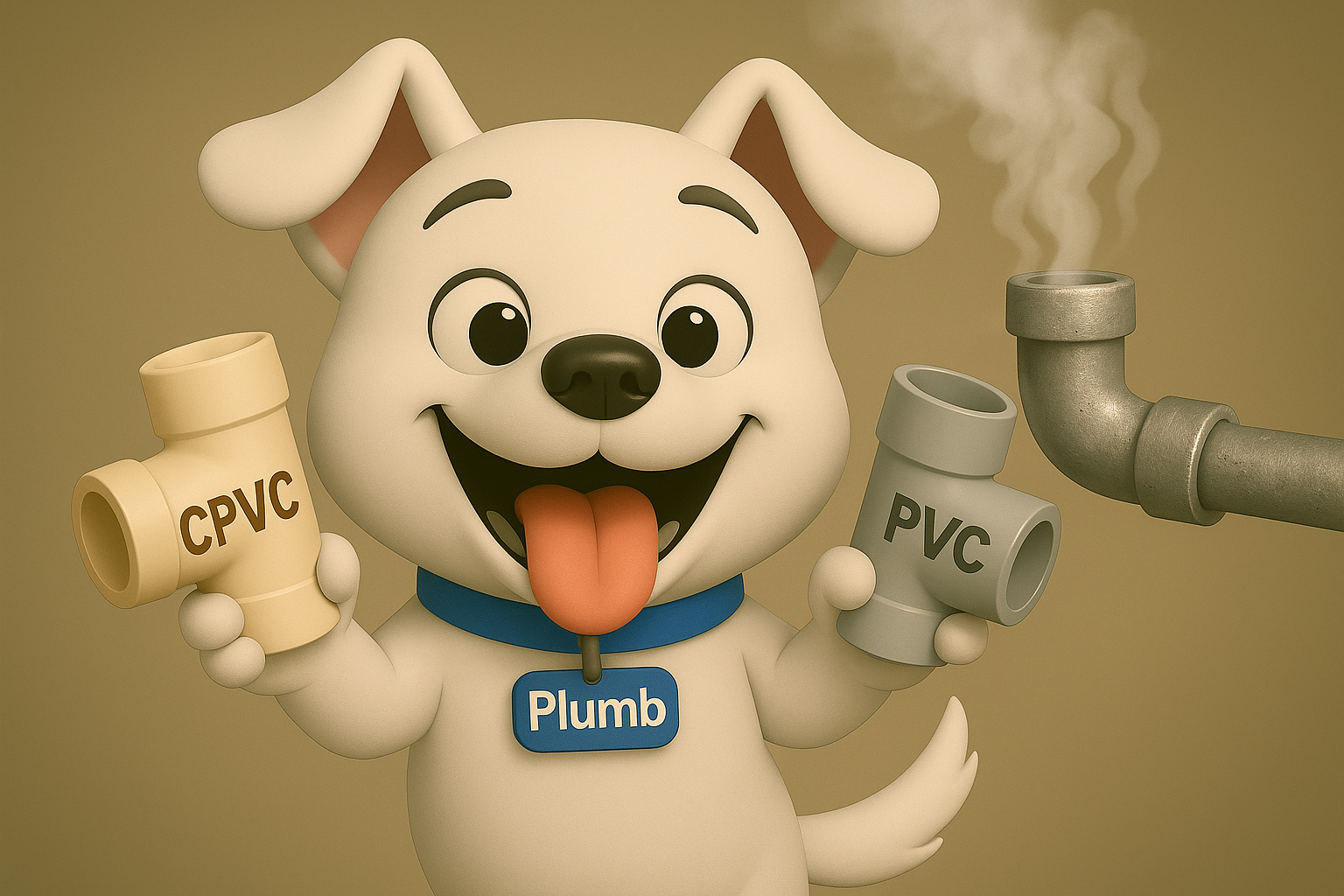
So, you’re diving into a project that involves hot water lines, and now you’re faced with two similar-looking plastics sitting on the shelf: PVC and CPVC. They might look like twins and even use similar primers and cements for gluing, but here’s the thing — only one of these is suitable for your hot water system. Hey there, I’m Plumb, your go-to plumbing buddy, and I’m here to help you avoid a pretty costly mistake.
Let’s start with PVC, or polyvinyl chloride. This is the most common plastic pipe you’ll come across. It’s durable, budget-friendly, and ideal for cold water uses, irrigation, and drain lines. But when it comes to hot water? Well, that’s where PVC falls short. Regular PVC starts to soften around 140°F. So, if you’re running a hot shower or a dishwasher, it could easily lead to a disaster.
Now, CPVC, which stands for chlorinated polyvinyl chloride, is like the heat-resistant sibling of PVC. Thanks to that extra chlorine in its structure, CPVC can handle temperatures up to around 200°F. This makes it a safe choice for both residential and commercial hot water lines. Plus, it’s pressure-rated for those systems that need to pack a punch. That’s why most building codes insist on using CPVC for anything involving hot water.
So, what’s the real scoop on choosing fittings? PVC is perfect for outdoor irrigation, sprinklers, and cold water supply lines — basically, anywhere the water is cool. On the flip side, CPVC should be your go-to for anything that connects to a water heater or runs into kitchens and bathrooms. If you try to sneak in PVC where CPVC should be, expect leaks, warped pipes, and some serious code violations.
Here’s a quick tip: even though they look alike, PVC and CPVC fittings aren’t interchangeable. They come in different sizes and need different types of cement. Typically, PVC is white, while CPVC usually has a cream or light yellow color, which makes it easier to tell them apart.
Now, I often hear homeowners asking, “What about Schedule 80 PVC? It’s thicker, can’t I use that for hot water?” The answer is still no. Sure, Schedule 80 PVC is stronger under pressure, but it doesn’t fix the temperature issue. Heat is the real game changer here, and CPVC is the clear winner.
So, the bottom line? For cold water and irrigation, PVC is your champ. But for anything involving hot water lines, CPVC is the way to go. Mixing them up might seem harmless at first, but trust me, you’ll regret it when that hot water starts flowing.
At Plumbfounded, we’ve got both PVC and CPVC fittings on hand — including those tricky transition fittings you might need if your project involves both types. This way, you can keep your irrigation cool while ensuring your showers stay hot, minus the hassle.
For reliable products, visit PlumbFounded.com or call 800-716-8820 to shop now.